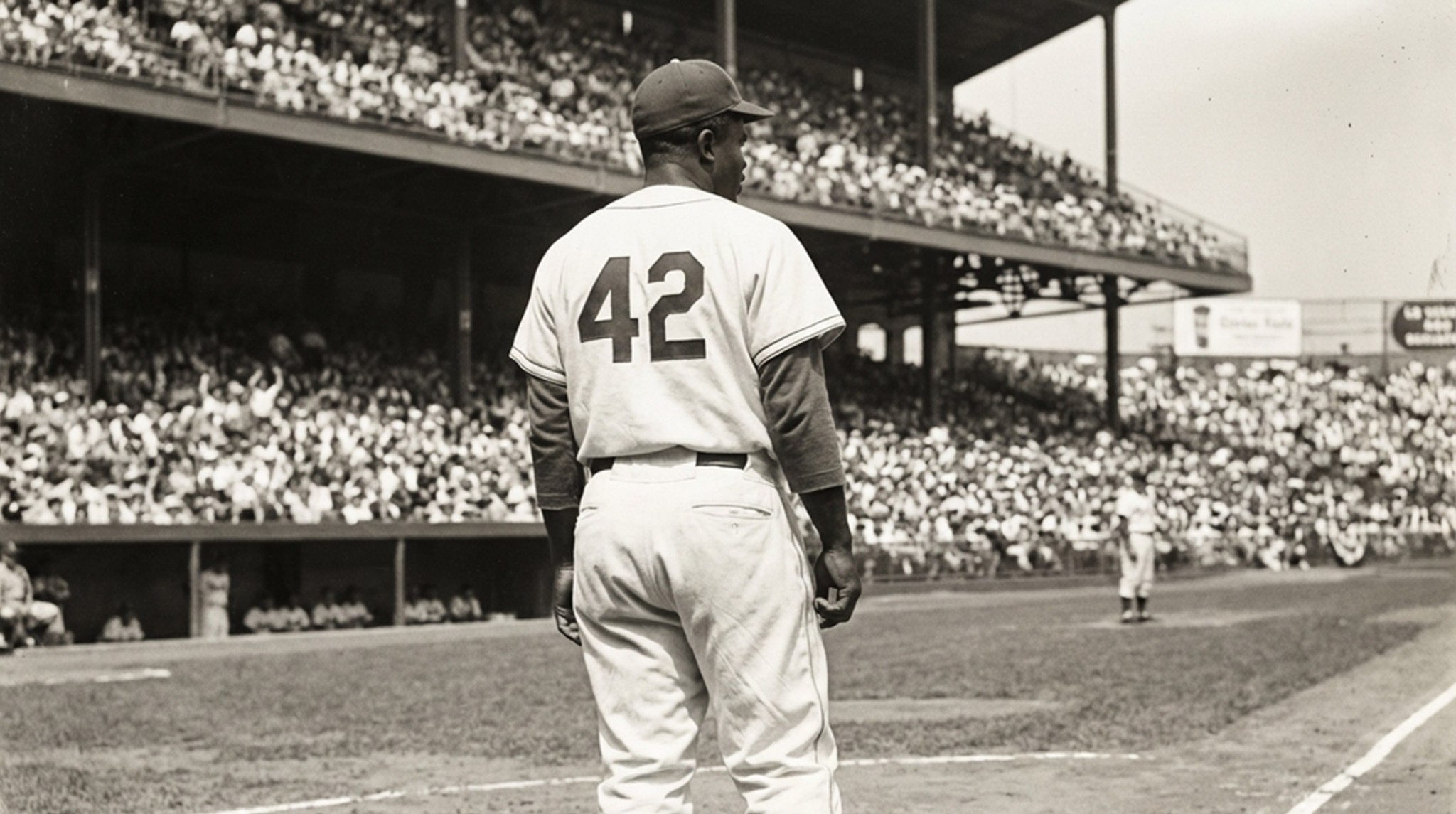
Yesterday, Major League Baseball marked Jackie Robinson Day, as it does every April 15. Across the league, players, coaches and umpires wore number 42, honoring the day Robinson stepped onto Ebbets Field in 1947 and broke Major League Baseball’s color barrier. In 2026, that observance marked the 79th anniversary of his debut.
But Jackie Robinson’s story isn’t just about baseball; it’s about what happens when belief steps into public view.
In 1945, Branch Rickey signed Robinson to the Dodgers organization, first assigning him to Montreal. Rickey was not simply looking for a talented player. He was looking for the right man to carry a message under enormous pressure. Robinson had the athletic ability, but he also had the discipline to endure what would come next.
That pressure arrived in full on April 15, 1947. When Robinson debuted with Brooklyn, he became the first Black player in the modern major leagues. He faced hostility from opponents, abuse from crowds and scrutiny from every direction. Yet his debut changed something larger than a lineup card. An idea had taken the field in a Brooklyn Dodgers uniform.
That’s why this story still has something to say to organizations today. Values written on a wall are easy to admire. Values lived in public are much harder. A ministry can say it believes in courage, fairness and dignity. A church can say it cares about truth, justice and the worth of every person. But people believe those messages when they can see them embodied at cost.
That is one of the great lessons of branding and communication. A message becomes credible when it becomes visible. It is not enough to say what you stand for. At some point, you have to step onto the field and let people see it.
At Radiant, that’s part of what we help organizations do. We help them clarify their message, yes, but also align it with what they actually do. Because in the end, the most powerful brands are not the ones with the best slogans. They are the ones whose convictions can be seen from the stands.